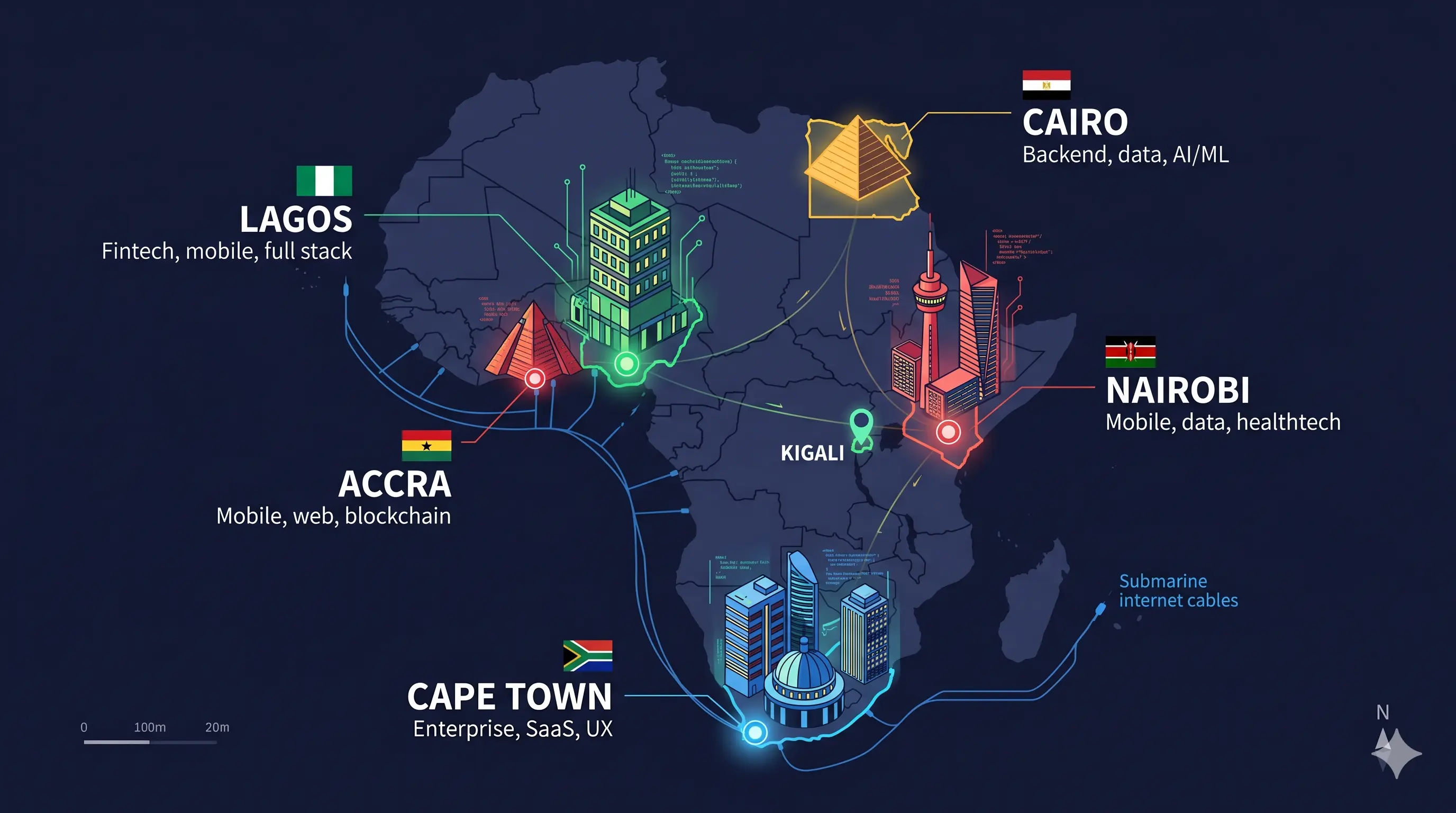
Software Engineering in Nigeria: Case Studies of Local Apps Scaling Globally
Discover how Nigerian software engineering powers global platforms through scalable systems, cloud infrastructure, and innovation.


Nigeria’s technology ecosystem has grown a lot in the last decade. Many startups and digital platforms are now being built by Nigerian software engineers. These applications usually start by solving problems within Nigeria, such as financial access, logistics, education, and digital services. As the tech industry grows, more developers are building systems that can support a large number of users and eventually expand beyond Nigeria.
Software engineering plays a big role in this growth. When an application first launches, it may only have a small number of users, so the system is relatively simple. But as more people begin to use the platform, the system needs to grow as well. If the software is not designed properly, it may become slow, unreliable, or even stop working when demand increases. Because of this, many Nigerian developers now build applications with scalability in mind. This means designing systems that can continue to work efficiently even as the number of users increases. It also means thinking about long-term growth early in the development process, instead of trying to fix scalability problems later.
Software Engineering Foundations in Nigeria
Building applications that can grow over time requires strong engineering practices. One common approach is modular system design. Instead of building everything as one large system, developers separate the application into different components that each handle specific responsibilities. For example, parts of the system such as user authentication, payments, notifications, and data storage may be handled separately. This structure makes it easier for engineering teams to update or improve individual parts of the system without affecting the entire application. It also helps when the application begins to handle more users because developers can scale specific services instead of rebuilding the entire system.
Another important factor is the use of cloud infrastructure. Many Nigerian startups rely on cloud platforms like AWS, Google Cloud, or Microsoft Azure. These services allow companies to increase computing power automatically when more users begin using the application. Instead of buying physical servers, startups can scale their infrastructure based on demand, which makes it easier for smaller teams to manage growing platforms.
Security is also very important, especially for applications that handle financial transactions or personal data. Developers need to implement secure APIs, encryption, and authentication systems to protect users and maintain trust in the platform. If users do not feel that their information is safe, it becomes difficult for a platform to grow.
Modern development practices also help teams maintain stable systems. Tools for automated testing, performance monitoring, and continuous deployment help developers identify issues quickly and release updates without affecting the overall system. These practices make it easier for teams to improve their applications while keeping them reliable for users.
Designing Systems for Global Scaling
Scaling an application globally requires more than just supporting more users. The system also needs to work across different regions, support international users, and remain reliable no matter where it is being accessed from. This requires developers to think about scalability during the design stage of the application.
One challenge is handling large amounts of traffic. Applications need to process thousands or even millions of requests without slowing down. To handle this, developers use scalable databases, APIs, and load balancing systems that distribute traffic across multiple servers. These systems allow applications to continue working smoothly even when usage increases rapidly.
Another challenge is reliability. If an application is being used in different countries, downtime can affect many users and businesses. Monitoring tools and automated alerts help engineering teams detect problems quickly so they can fix them before they affect too many people.
Managing large amounts of data is also an important part of scaling. As the number of users increases, platforms must store and process more information while keeping the data accurate and secure. Scalable database systems and distributed storage solutions help manage this growth while maintaining good performance.
These engineering decisions determine whether an application can grow beyond its original market. Many Nigerian companies started by solving local problems but later expanded into international markets because their systems were designed to support growth from the beginning.
Case Studies of Nigerian Applications Scaling Globally
One example is Paystack, a payment platform that helps businesses accept online payments. The company started in Lagos in 2015 with the goal of making digital payments easier for Nigerian businesses. The engineering team built a developer-friendly API that allowed other applications to easily integrate payment processing. Because the system was designed to handle large numbers of transactions, it quickly became popular among startups and online businesses. As more companies began using the platform, Paystack expanded into other African markets such as Ghana and South Africa. The company focused on maintaining reliable infrastructure and strong security systems as the number of transactions increased. Its strong engineering foundation eventually led to its acquisition by the global payments company Stripe.
Another example is Flutterwave, which focuses on cross-border payment infrastructure. The platform was designed to handle payments across different countries, currencies, and banking systems. Building such a system requires strong backend architecture because payment regulations, currencies, and banking networks vary across regions. By building flexible APIs and scalable infrastructure, Flutterwave was able to expand across many African countries while also supporting international businesses that operate in Africa. Today the platform processes payments for businesses across several continents, showing how Nigerian payment systems can grow into global financial infrastructure.
Nigeria has also produced global platforms outside the financial sector. One example is Andela, which started as a company that trained software developers in Nigeria. Over time, it built digital platforms that connect African developers with companies around the world. These systems manage developer profiles, technical assessments, and remote collaboration between engineers and international employers. Because the platform needed to support thousands of developers and companies across different regions, it required scalable systems for managing large amounts of user data. Today, Andela operates as a global marketplace for engineering talent.
In the education sector, uLesson shows how Nigerian technology platforms can scale internationally. The application provides mobile learning tools that include video lessons, quizzes, and student progress tracking. Since many users access the platform through smartphones, the engineering team focused on building mobile-friendly systems that work well even with slower internet connections. As the platform gained more users, it expanded into several African countries. This required the system to support large numbers of students accessing educational content at the same time while maintaining stable performance.
Another example is TradeDepot, which operates in the logistics and commerce sector. The platform connects consumer goods manufacturers with small retailers by managing product orders, inventory, and supply chain operations. As more retailers joined the platform, the system needed to process large amounts of operational data and real-time updates. This required scalable infrastructure and reliable data management systems to ensure that orders, deliveries, and inventory levels remained accurate. Platforms like TradeDepot show how Nigerian engineering teams are also building scalable systems in commerce and logistics.
Challenges Nigerian Developers Face
Even though Nigeria’s tech ecosystem is growing quickly, developers still face several challenges. Infrastructure issues such as unstable electricity and inconsistent internet connectivity can sometimes affect development environments and testing processes.
Funding is another challenge for many startups. Building scalable systems requires investment in infrastructure, security, and engineering talent. Early-stage companies sometimes struggle to secure enough funding to support these technical requirements.
There is also strong global demand for skilled developers. Many Nigerian engineers receive opportunities to work for international companies, which can make it difficult for local startups to retain experienced talent. Despite these challenges, Nigerian developers continue to build innovative platforms that compete on a global level.
Conclusion
Software engineering is playing a major role in the growth of Nigeria’s technology ecosystem. Many developers are now building applications that are designed not only for local markets but also for international expansion. Strong engineering practices such as modular architecture, cloud infrastructure, secure systems, and modern development workflows help applications handle increasing demand. When these practices are applied well, platforms can grow beyond their original markets.
Companies like Paystack, Flutterwave, Andela, uLesson, and TradeDepot show how Nigerian-built platforms can scale globally across different industries including finance, education, logistics, and developer services. Their journeys demonstrate that with the right engineering foundations, local solutions can grow into global technology platforms.