Israel Alagbe
A Full-Stack Engineer with 8+ years of experience building scalable, secure and high-performance systems. I work across modern frontends, backend APIs and distributed event-driven microservice architectures, and I’m comfortable taking products from concept to production. I focus on reliability, maintainability and solid user experience, and I work well in cross-functional, remote teams.
Article by Gigson Expert
Picking the right API style isn’t just a technical decision; it’s a strategic one. It profoundly shapes how fast your team ships features, how your clients interact with your system, and how well your product scales over time.
The three most common API styles today are REST, GraphQL, and gRPC. Each one solves a different set of problems, so the best choice depends entirely on what you’re building.
1. REST (Representational State Transfer)
Overview
REST is an architectural style that uses HTTP as its foundation. Clients and servers interact through standard HTTP verbs (GET, POST, PUT, DELETE) to manage resources, which are uniquely identified by a URL endpoint. It's the web's default way of communicating.
In short, you ask the server for a specific resource at a specific URL, and the server gives you the whole thing back, usually in JSON format.
Example: Simple GET Request
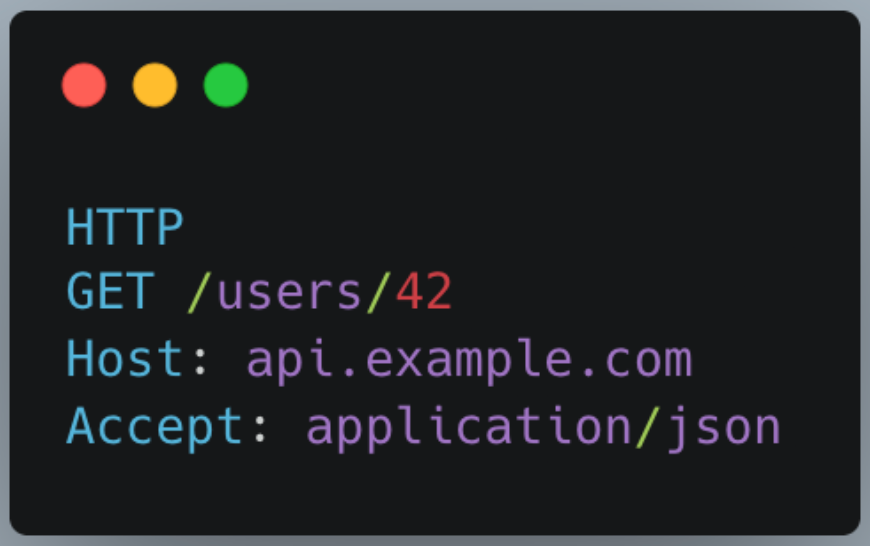
To fetch a user with ID 42, a REST client makes a simple, human-readable call:
Key Strengths
- Simple & Accessible: Easy to understand and implement, making the learning curve shallow.
- Broad Compatibility: Works everywhere—browsers, mobile apps, servers. It's the most widely supported standard.
- Excellent Caching: Leverages native HTTP caching mechanisms (e.g., ETags, Cache-Control headers) effectively.
- Mature Ecosystem: Robust tooling and massive community backing.
Key Weaknesses
- Over-fetching: The server often sends more data than the client needs, consuming extra memory and bandwidth.
- Under-fetching (N+1 Problem): Fetching related data often requires multiple separate API calls (round trips), which degrades performance
- Complex Resource Management: Can get messy as resources evolve, requiring multiple endpoints to manage evolving views and relationships
Best For
- Public APIs that must be consumed by many different, unknown clients and platforms.
- CRUD-heavy applications where the primary operations are standard resource management
- Systems where simplicity, broad compatibility, and ease of integration matter more than ultra-fine-tuned performance
2. GraphQL (Graph Query Language)
Overview
Developed by Facebook, GraphQL is a query language for APIs that operates over a single endpoint. Clients get to declare exactly what fields and objects they need, and nothing more. The server responds with only that requested data.
In simple terms, you tell the server, "I only want the user's name and the last three comments on their post," and the server does precisely that, eliminating redundant data transfer.
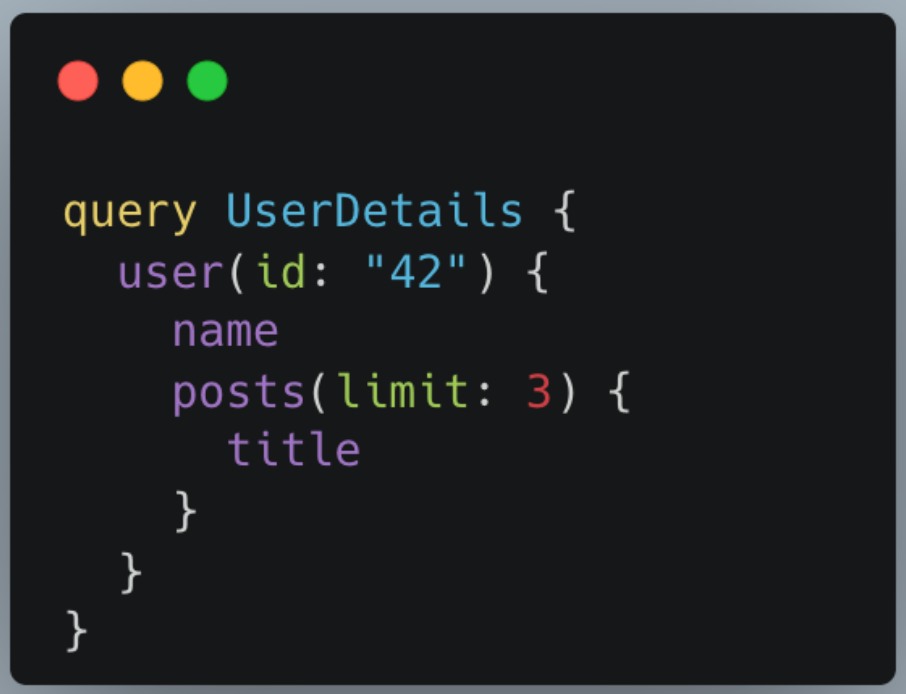
Example: Sample GraphQL Query
This query requests only the user's name and the titles of their posts, reducing the payload dramatically:
GraphQL
Key Strengths
- Eliminates Over-fetching: Clients specify the data, drastically reducing payload size and network transfer.
- Fewer Round Trips: Solves under-fetching by allowing all necessary data to be retrieved in a single request.
- Strongly Typed Schema: Provides a clear contract between client and server, enabling better development tooling.
- Great for Complex Views: A strong fit for modern frontends (React, mobile) that require diverse data for a single screen.
Key Weaknesses
- Operational Complexity: Can be more complex to set up, maintain, and secure than REST.
- Caching Challenges: Doesn't leverage native HTTP caching well, requiring custom, client-side solutions.
- Performance Control: Poorly constructed queries can still be performance killers if not properly monitored and controlled (e.g., deep nested queries).
- Learning Curve: Teams require time to master the query language and schema design.
Best For
- Client-heavy products (mobile, complex web apps) where the UI dictates flexible data needs.
- Applications with complex data relationships or rapidly evolving requirements.
- Teams prioritising fast UI iteration and minimising front-end data dependencies.
3. gRPC (Google Remote Procedure Call)
While GraphQL focuses on giving clients flexible data access, gRPC is designed for an entirely different purpose: high-speed backend communication.
Overview
gRPC is a modern, open-source framework focused on high-performance, service-to-service communication. It uses HTTP/2 for multiplexing and binary serialization, specifically Protocol Buffers (Protobuf), to achieve exceptional speed and efficiency.
The server defines services and methods (like a function call), and the client calls these methods as if they were local.
Example: Protobuf Message Definition
This defines the contract for a simple request, which is then compiled into efficient code in various languages:
Protocol Buffers

Key Strengths
- Speed and Efficiency: Leverages HTTP/2 and Protobuf's binary format for minimal overhead and maximum performance.
- Built-in Streaming: Supports client, server, or bidirectional streaming for real-time applications.
- Strong Typing via Protobuf: Enforces a strict, language-agnostic schema contract.
- Ideal for Microservices: Perfect for the heavy data exchange typical of distributed backend systems.
Key Weaknesses
- Browser Unfriendliness: Does not natively run in a standard browser without a gRPC-Web gateway layer.
- Technical Overhead: Harder for beginners, and debugging can be more technical due to the binary payload.
- Tooling: While improving, the debugging and tooling ecosystem is less mature than REST's.
- Not for Public APIs: Its reliance on Protobuf and HTTP/2 makes it unsuitable for broad, external consumption.
Best For
- Microservice architectures and internal service communication.
- High-performance internal APIs where speed and efficiency are mission-critical.
- Real-time processes like chat, video, IoT, or high-volume event processing.

When to Use One Over the Other
When to choose REST
REST should be your default choice for its low barrier to entry and unmatched compatibility. If you are building a public-facing API that needs to be easily consumed by any client (browser, mobile, third-party developers) without special setup, or if your application primarily revolves around standard CRUD operations on well-defined resources, REST is the reliable, safe option. It is the most robust in terms of native browser support and caching maturity.
When to choose GraphQL
GraphQL is ideal when your client requirements are highly flexible and complex. If you have a fast-moving UI, multiple front-end views that need different slices of data from the same backend resources, or if network performance for mobile clients is critical, GraphQL is the superior choice for minimizing round trips and payload size.
When to choose gRPC
gRPC is reserved for internal, high-performance back-end systems. If you are building a microservices architecture where services need to communicate with minimal latency and maximum throughput, or if you require real-time, long-lived connections for streaming data (like live chat or IoT data), gRPC is the clear winner. Its binary nature and reliance on Protocol Buffers make it unsuitable for general public use but unbeatable for internal efficiency.
Conclusion
There is no single 'best' API architecture, only the one that best matches your system's constraints, clients, and performance needs.
For broad compatibility and public exposure, stick with the widely supported REST. For modern, data-hungry frontends, choose the flexibility of GraphQL. And for the high-speed engine room of your internal infrastructure, leverage the raw performance of gRPC.
Frequently Asked Questions (FAQs)
1. Can I use more than one API architecture in a single project?
Yes, absolutely. This is the most common approach for large systems. For example, a company might use gRPC for high-speed, internal microservice communication and REST or GraphQL for its public-facing client APIs. This is often called a hybrid architecture.
2. Is GraphQL replacing REST?
No. GraphQL is a powerful tool that solves the problem of under- and over-fetching, but it has a steeper operational cost and different trade-offs regarding caching and simplicity. REST remains the default for most simple or public-facing APIs due to its unparalleled simplicity and compatibility. They are complimentary, not replacements.
3. Why is gRPC not suitable for public APIs?
gRPC requires clients to either support HTTP/2 (which is not guaranteed in all environments) and to handle the binary Protobuf serialization format. This creates a high barrier to entry for unknown, third-party developers, making it impractical for general public use.
4. How do these architectures handle API Versioning?
- REST: Versioning is typically handled by including the version number in the URL (e.g., /api/v1/users) or in the HTTP header. This maintains backward compatibility.
- GraphQL: Versioning is often handled internally by evolving the schema without breaking existing fields (e.g., by deprecating old fields). The single endpoint usually remains the same.
- gRPC: Versioning is strict and managed by the Protocol Buffer (.proto) files. Changing the Protobuf file requires both client and server to regenerate code, ensuring a clear contract but demanding more coordination.
5. What is the impact of JSON (REST/GraphQL) vs. Protocol Buffers (gRPC)?
The key difference is the data format:
- JSON (REST/GraphQL): Text-based, human-readable, and universally compatible with browsers. However, it is verbose and requires more parsing time, leading to slightly higher latency and bandwidth consumption.
- Protobuf (gRPC): Binary format, not human-readable. It is highly compressed, resulting in smaller payloads and faster serialization/deserialization. This is the primary driver behind gRPC's superior performance in internal, high-volume scenarios.
6. Which architecture is best for managing complex relationships?
GraphQL is explicitly designed to handle complex, interconnected data models, much like a graph. A client can retrieve deeply nested, related data from multiple resource types in a single request (e.g., a User, their Posts, and the Comments on those Posts).
While REST and gRPC can achieve this, they often require:
- REST: Multiple round trips (N+1 problem) or custom, bloated endpoints.
- gRPC: Complex, pre-defined Protobuf messages that are not flexible for arbitrary queries

.webp)